Reporting Infrastructure

Finance infrastructure your board and investors will trust.

The same verification-led build, pointed at the monthly close. Once the deal is done, or when there is no deal at all, the engagement builds and then runs the reporting infrastructure for any company whose numbers face a board every month. Agentic AI builds and maintains the system, a deterministic engine computes every number, and one intake feeds every deliverable, so the workbook, the deck, and the forecast cannot disagree with each other.

The Build

What gets built and what keeps running

One system, built around the close you already run rather than a template you have to adopt. It starts from the ERP exports and the Excel environment your team lives in today, so there is no platform migration underneath it.

Core Build
Automated Close and Reporting

We automate the monthly close cycle from your ERP exports through board pack delivery. The manual export, rebuild, and formatting work comes out of the close, and that time goes back to analysis.

  • Automated pipeline from your ERP exports
  • Variance against budget and prior year, across month, quarter and year to date
  • Rolling forecast refreshed every close, projection method set per line item
  • Board pack compiled and formatted automatically
PE Focused
PE Board Reporting Systems

Built from direct experience sitting in PE-reported finance roles. The board package is built to the format your GP expects and the timeline they require, so the quarterly review starts with the story instead of the reconciliation.

  • EBITDA bridge and waterfall automation
  • A KPI framework for your vertical, computed from the same intake as the board pack
  • Covenant schedule tracking and headroom within the board pack
  • Management presentation financial sections
Retainer
System Maintenance and Support

We build it, then we maintain it, designed to catch issues before they reach the board. Monthly monitoring, model updates as your business evolves, and on-call support through every close cycle.

  • Monthly system monitoring and data refresh
  • Quarterly model and forecast updates
  • Reporting template and format upkeep
  • Board cycle support and scenario requests
Industry Competitive Analysis

Know where you stand before your board asks

Most reporting packages stop at your own numbers. Yours should say how those numbers compare. The peer view is built in, from primary sources, with the citation on every figure.
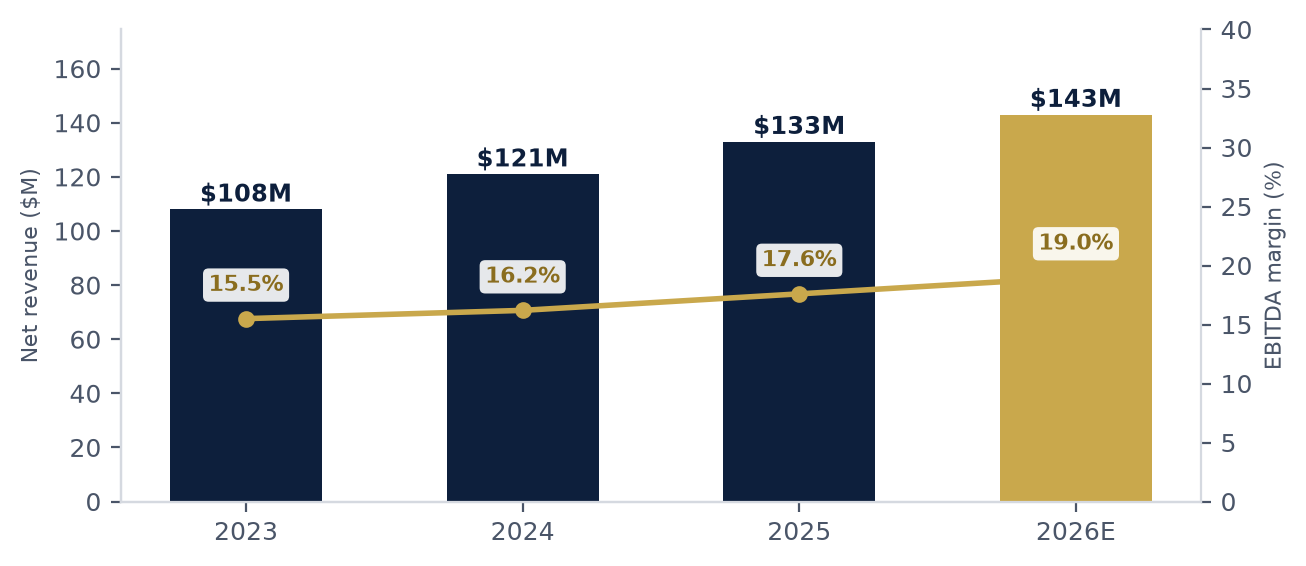
Rendered exhibit from a sample-data build showing revenue bars and an EBITDA margin line by year
A rendered exhibit from a sample-data build, exactly as it ships inside the market perspective document. Sample company, sample figures.
Deterministic, No Estimates
SIC-Code Peer Comps

Every comp set is drawn from SEC filers under the same four-digit SIC code as your company, pulled from EDGAR with the source URL on every figure. Your own metrics are computed from the same intake as your board pack and placed against the peer distribution, with your percentile placement where the filing data supports it.

  • Same four-digit SIC code, every time, so the peer set is defensible
  • Source URL on every peer figure
  • Your placement against the peer distribution, not just a list of names
  • Anything EDGAR does not carry comes back empty rather than estimated
Sector Context
Market Perspective

A written market view for your vertical covers the industry outlook, the KPI framework buyers and boards use to judge companies like yours, public comparables, and your positioning against the sector. Every market figure is dated and sourced. Your own figures tie to the same trial balance as the rest of the package.

  • Industry outlook with dated, sourced figures
  • The KPI set your vertical is judged on
  • Your positioning against the sector, from your own intake
  • Ties to the same source data as your board pack

The Model

Built once. Maintained permanently.

The deal is the front door. The build is designed to outlast it, a system specific to your company, your ERP, your investor reporting requirements, and your close schedule, maintained so it keeps running through every close.

1
Phase One
Finance Automation Assessment

We go inside your systems and map what your close actually looks like today. Chart of accounts, close process, the reporting your board sees, and every place a person is doing work a system should be doing. Scope is agreed before we start, and you get a written implementation plan showing exactly what we would automate and in what order, and that plan is yours to keep whether or not you build with us.

2
Phase Two
System Build

Agentic AI builds your custom FP&A automation system. The pipeline runs from your ERP exports through variance analysis, rolling forecast refresh, and a board-ready reporting package, and every build clears an automated quality gate before anything reaches you. One intake feeds the workbook, the deck, and the forecast, so nothing is rekeyed and nothing drifts between them.

3
Phase Three
Ongoing Maintenance

The system runs. We keep it running. Monthly data refresh, error monitoring, quarterly model updates, and board cycle support. The board pack comes off the same intake as the close itself, so no rebuild stands between closing the month and reporting it.

Why This Model

One build, maintained on retainer

Each engagement leaves you with a build shaped around your close, open enough to check for as long as you run it.

01
Every Deliverable Is Yours to Keep

Every workbook, model, and board deck we produce is delivered formula-driven and self-contained. You can open it, audit every number down to the cell, and keep it. You pay a month-to-month retainer for the automation behind it, with no software license and no multi-year platform contract underneath it.

02
Fast Because Nothing Is Rekeyed

We work from your existing ERP exports in Excel, so there is no IT project and no implementation program underneath the build. One intake feeds every deliverable, nothing is rekeyed, and nothing needs reconciling between the workbook, the deck, and the forecast. That architecture is where the speed comes from, and the automated gate on every build is what keeps it honest.

03
Built Around Your Operating Drivers

Every model is built around the operating drivers that actually move your business, things like multi-site P&Ls, utilization and capacity, unit economics, and customer or contract concentration. The architecture is shaped by how your company actually runs, from day one.

Vantage vs. Enterprise Firms

You don't need an enterprise transformation. You need this fixed.

The large finance-transformation firms do real work, for companies with the budget and the calendar to absorb a platform implementation. That model is built for far larger enterprises. It asks you to implement a licensed platform you then pay for every year, on a timeline that runs longer than a board cycle.

We work from the ERP exports and Excel environment you already run, build a system specific to your chart of accounts and the reporting template your board or sponsor expects, and hand you every report formula-driven and yours to keep. Maintained on a month-to-month retainer with no license and no multi-year contract underneath it.

Enterprise firms implement software. Vantage builds the reporting infrastructure your finance function runs on, then keeps it running.

Verification

Why the board pack holds up

A reporting system earns its place the first time somebody in a board meeting asks where a number came from. Every figure is produced by deterministic code and every workbook ships formula-driven. An automated quality gate runs on every build. A separate adversarial review, dispatched to a reviewer who did not build the package, argues with the work as well.

If the close runs long every month, that is a short conversation

Bring your close calendar and the board pack you send today. Twenty minutes tells us both whether there is a build here worth doing.

Schedule a Call